 |
The Blank Slate Friday May 14th, 2004 |
 |
Dr. Steve Pinker Harvard University |
?Using our genes as an excuse for fatalism is unwise. But so is pretending that they don’t matter at all.” |
|
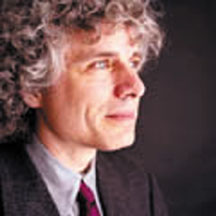
| Dr. Steven Pinker, Professor of Psychology at Harvard University, a native of Montreal, received his BA from McGill University in 1976 and his PhD in psychology from Harvard in 1979. After serving on the faculties of Harvard and Stanford Universities a year each, he moved to MIT in 1982, where he was Professor of Psychology in the Department of Brain and Cognitive Sciences and a MacVicar Faculty Fellow. His research on visual cognition and on the psychology of language has received the Troland Award from the National Academy of Sciences and two prizes from the American Psychological Association. He has also received awards for his graduate teaching at MIT and for his undergraduate teaching at MIT, two prizes for general achievement, an honorary doctorate, and five awards for his popular science books The Language Instinct and How the Mind Works. |
Everyone has a theory of human nature. Everyone has to anticipate the behavior of others, and that means we all need theories about what makes people tick. A tacit theory of human nature – that behavior is caused by thoughts and feelings – is embedded in the very way we think about people. We fill out this theory by introspecting on our own minds and assuming that our fellows are like ourselves, and by watching people’s behavior and filing away generalizations. We absorb still other ideas from our intellectual climate: from the expertise of authorities and the conventional wisdom of the day.
|
|